The Webster Viridarium


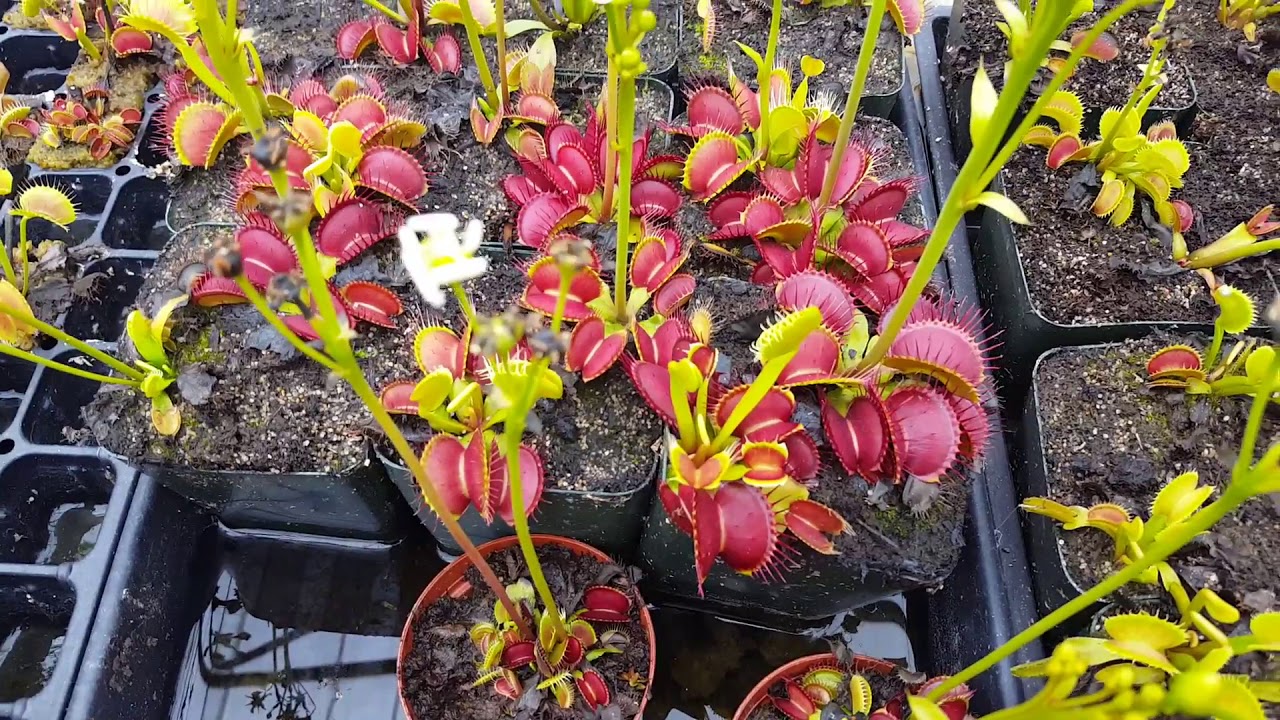



Venus Flytraps
Water
Venus flytraps (Dionaea) grow in marshes and bogs, so they prefer their soil to be moderately damp at all times.
While some growers top water their flytraps, others stand the flytrap’s pot in about a ⅓ of an inch of water. If you do water your plant from the bottom, it’s important to have a deep enough pot that maintains a good distance from the flytrap’s rhizome to the pot’s bottom. The rhizome should not be sitting in water.
Bottom watering works well during the growing season, but during dormancy they require less water and the soil should be kept just slightly damp. Inexpensive moisture meters are available to get a clearer sense of just how damp or dry your plant’s soil is.
Most importantly, Venus flytraps require water that is free of chemicals, salts, and other minerals. It is recommend you water your flytrap with distilled, rain, or reverse osmosis water. Regardless of the source, the water should not contain a TDS (total dissolved solids) level of more than 50 ppm (parts per million).
Light
Venus flytraps require at least six hours of direct sunlight per day. If you’re growing your plant indoors choose a bright sunny and preferably south-facing windowsill. Flytraps grown indoors often struggle and have a shortened lifespan due to insufficient sunlight. One good indicator of sufficient light for most varieties of flytraps, is if the insides of their traps turn red.
Soil
Standard potting soils contain fertilizers and other minerals that will kill your flytrap. An ideal mix for Venus flytraps containing primarily long-fiber Sphagnum moss, or fertilizer-free Sphagnum peat often mixed with either lime-free horticultural sand, perlite, or both.


You could avoid the fuss and purchase premixed soil online.
Temperature
Venus flytraps are native to the shore line of North Carolina and parts of South Carolina. They are very resilient to high temperatures during their growing season as long as their soil is wet. During winter, they will tolerate light frost and snow.
Feeding
It isn’t necessary to feed a Venus flytrap but if you do, feed it only small insects and only occasionally (once or twice a month). Growing your Venus flytrap in a location with access to insects, may help it grow more quickly.
Dormancy
Venus flytraps die back and go dormant during the winter. When dormant, they prefer low temperatures but should be protected from extreme cold (extended periods under 20 degrees F). Move your flytraps into a protected area during the winter months if frequent freezing temperatures are common in your area. The goal is to mimic the experience a Venus flytrap would have in its native Carolina climate. Without a dormancy period, your plant’s health will begin to decline and eventually it may die.

Where do we buy our carnivorous plants?
Bergen Water Gardens has a great selections of not only carnivorous plants, but orchids, and water plants as well. Churchville, New York
Flytrapstore.com has a remarkable selection of Venus flytraps. Crystal City, Missouri
Sarracenia Northwest has a great selection of Sarracenia and other carnivores. Eagle Creek, Oregon

The Savage Garden has been the number one bestselling book for those interested in growing carnivorous plants.